Sep-01-2026

Self-leveling compound is one of the most technically demanding products in the dry mix mortar category. It must flow freely enough to self-level under gravity, set fast enough to accept foot traffic within hours, bond reliably to a wide range of existing substrates, and remain crack-free through years of thermal cycling and dynamic loading from floor traffic above. Achieving all four requirements simultaneously is not possible without Redispersible Polymer Powder (RDP). RDP is the additive that bridges the gap between a rigid, brittle cement-based underlayment and a flooring system that performs reliably in real service conditions.
Self-leveling compounds face a unique combination of performance challenges that distinguish them from other cementitious products:
| Requirement | Why It's Challenging | Consequence of Failure |
|---|---|---|
| High flowability | Must spread under gravity to a flat surface with minimal troweling | Poor leveling, uneven floors, costly rework |
| Fast setting time | Foot traffic needed within 4–8 hours | Project delays, extended downtime |
| Substrate adhesion | Applied over concrete, screeds, underfloor heating, or old tile | Delamination, hollow sounds, complete failure |
| Crack resistance | Substrate movement, shrinkage, and thermal cycling occur | Aesthetic failure, structural weakness, flooring system damage |
| Surface quality | Must be smooth, dense, and free of pinholes or craters | Poor finish, compromised flooring installation |
Traditional cement-based formulations cannot meet these demands. Ordinary cement mortar is rigid, shrinks during curing, and lacks the adhesion required for non-porous substrates. This is where RDP modification becomes essential.
Redispersible Polymer Powder is a spray-dried polymer additive—typically based on vinyl acetate-ethylene (VAE), styrene-butadiene (SB), or acrylic copolymers. When mixed with water, RDP re-disperses into a stable polymer emulsion. As the mortar cures, the polymer particles coalesce to form a continuous, flexible polymer film throughout the cementitious matrix . This film provides the three critical performance upgrades that self-leveling compounds require.
The polymer film imparts elastic deformation capability to the hardened compound. This flexibility is crucial for absorbing stress from:
Thermal movement: Substrates expand and contract with temperature changes
Shrinkage: Cementitious materials shrink during curing
Substrate movement: Floor systems experience dynamic loading and minor structural movement
Underfloor heating: Rapid temperature cycling creates significant stress
RDP-modified compounds show dramatically improved transverse deformation capacity, allowing the floor to accommodate movement without cracking. This is especially critical for installations over underfloor heating systems, where temperature cycles are frequent and severe.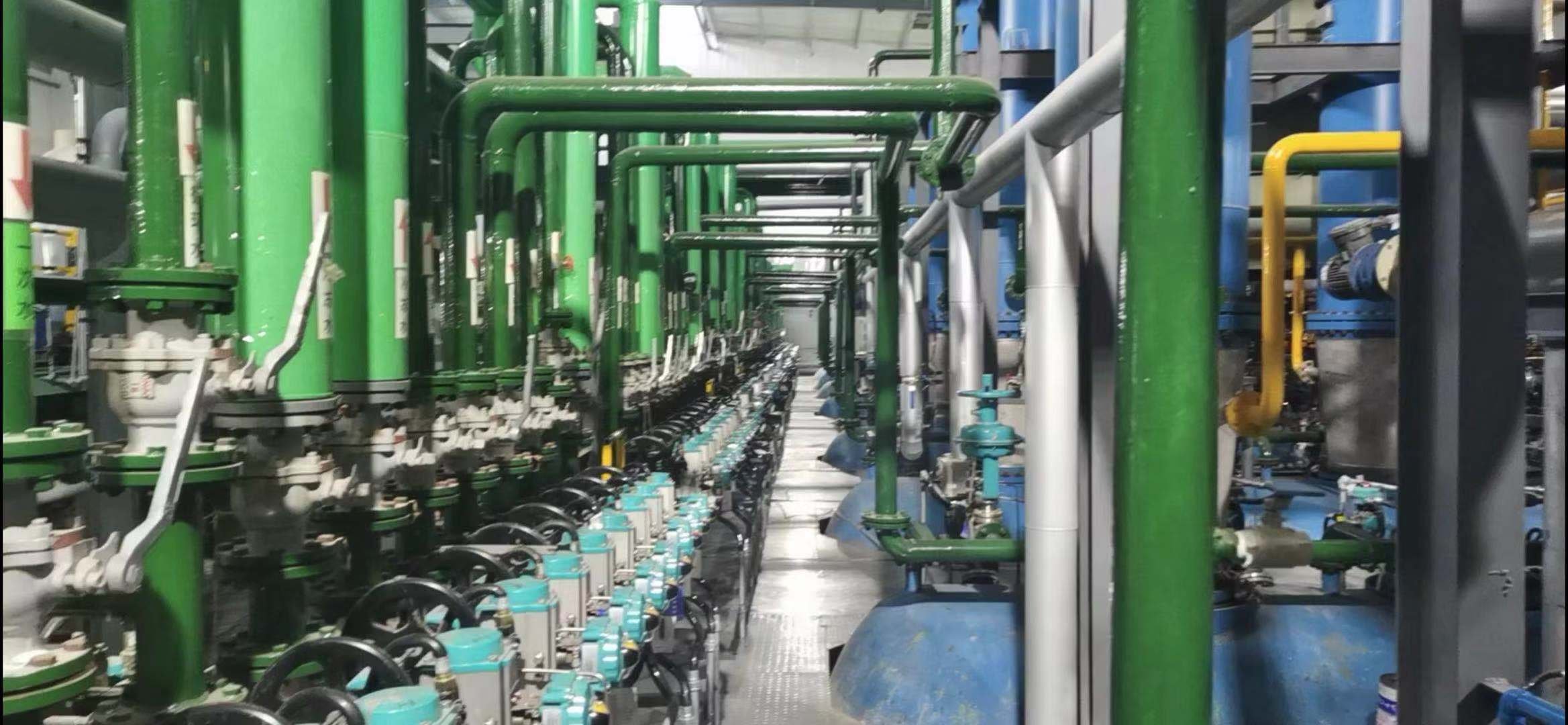
RDP enhances adhesion through multiple mechanisms:
Film formation: The polymer film acts as a flexible binder, creating a bridge between the mortar and the substrate surface
Surface modification: Polymer particles improve wetting and contact with difficult substrates like old tile, concrete, or steel
Chemical interaction: Functional groups in the polymer form stronger bonds with substrate surfaces
Industry products demonstrate that RDPs specifically designed for self-leveling compounds provide superior adhesion to substrates, reduced cracking, and excellent stabilization of the mix . This is critical when self-leveling compound is applied over less-than-ideal substrates—which is often the case in renovation projects.
Surface quality is where RDP-modified compounds truly excel. Properly formulated self-leveling compounds exhibit:
Crater-free surfaces: Minimized pinholes and surface defects
Smooth finish: Excellent leveling properties create a ready-to-receive floor
Reduced bleeding: Less water migration to the surface prevents weak surface layers
Good color consistency: No separation or discoloration
Abrasion resistance: Durable surface that withstands foot traffic and subsequent construction activity
The combination of proper defoaming agents and RDP chemistry creates the smooth, dense surface that flooring contractors demand.
RDP modifies the rheology of the fresh mortar, improving flow characteristics without sacrificing stability. A well-designed formulation with the correct RDP grade:
Maintains stable flow without excessive bleeding
Resists segregation during placement
Provides sufficient open time for installation
Reduces surface tension for better leveling
The polymer film created by RDP is inherently hydrophobic, significantly reducing water absorption. This translates to:
Better freeze-thaw resistance for exterior applications
Reduced damage from moisture ingress
Longer service life in wet areas such as bathrooms and kitchens
RDP modification increases surface hardness and abrasion resistance. Compounds with 3–5% VAE RDP (correct Tg) show measurable improvement in surface durability, with some specialized carboxylated SB RDPs delivering excellent abrasion resistance and surface appearance without compromising workability .
A reliable self-leveling compound formulation should include the following key components:
| Raw Material | Typical Dosage (% of dry mix) | Function |
|---|---|---|
| Portland Cement | 25–35 | Primary binder |
| Graded Sand / Calcium Carbonate | 50–65 | Filler and aggregate |
| VAE RDP (Correct Tg) | 2.5–5.0 | Flexibility, adhesion, surface quality |
| HPMC / Other Cellulose Ether | 0.05–0.20 | Water retention, rheology control |
| Superplasticizer | 0.20–0.50 | Flow and leveling |
| Defoamer | 0.05–0.15 | Surface quality, pinhole prevention |
| Retarder (if needed) | 0.05–0.20 | Open time control |
The optimal RDP dosage depends on the specific performance targets and substrate conditions:
| Application | Recommended RDP Dosage | Key Performance |
|---|---|---|
| General Interior SLC | 2.5–3.5% | Good flexibility and adhesion |
| Underfloor Heating Systems | 3.5–5.0% | Superior thermal cycling resistance |
| Exterior or Wet Area SLC | 4.0–5.5% | Enhanced water resistance and durability |
| Heavy-Duty Industrial Floors | 4.0–6.0% | Maximum abrasion resistance and strength |
For self-leveling compounds, the Glass Transition Temperature (Tg) of the RDP is a critical selection criterion. If the Tg is too high for the intended application, the polymer film becomes rigid and loses its ability to flex under stress, leading to cracking .
For standard interior applications: VAE RDP with Tg around 0–5°C is suitable
For underfloor heating or tropical climates: Lower Tg grades (0°C to -15°C) are preferred
For applications requiring very high surface hardness: Consider SB RDP options
Always verify the Tg on the Certificate of Analysis, not just the product name.
Self-leveling compounds represent one of the most technically demanding applications in the dry mix mortar industry. The combination of high flowability, fast setting, strong adhesion, and lasting durability cannot be achieved without polymer modification. Redispersible Polymer Powder (RDP) delivers all three critical performance upgrades—flexibility, adhesion, and surface quality—in a single additive.
By selecting the correct RDP grade and dosage, formulators can create self-leveling compounds that:
Flow freely for quick, accurate leveling
Set quickly to minimize project downtime
Bond reliably to any substrate
Resist cracking through thermal and mechanical stress
Deliver smooth, durable surfaces ready for final flooring installation
As the construction industry demands higher performance flooring systems, RDP has become not just a helpful additive, but an essential component of reliable, high-quality self-leveling compounds.
Related News
Sep 09, 2026
Redispersible Polymer Powder (RDP) Deep Dive: Mechanism & Benefits in Construction Mortars
Redispersible Polymer Powder (RDP) Deep Dive: What Is It and Why Does It Matter in Modern Construction? In modern construction, the performance of dry-mix mortars has long surpassed the simple combina
Sep 01, 2026
Redispersible Polymer Powder in Self-Leveling Compound: Flexibility, Adhesion and Surface Quality in One Additive Self-leveling compound is one of the most technically demanding products in the dry mi

Sep 01, 2026
Is Your Exterior Render Cracking? How RDP Powder Prevents Facade Cracking
Is Your Exterior Render Cracking? The Answer Is Almost Always in Your RDP Specification If you manufacture exterior render and are receiving cracking complaints from contractors or if your product per
Sep 01, 2026
Why Do Tiles Fall Off? RDP Powder Improves Tile Adhesive Performance
Why Do Tiles Fall Off? How RDP Powder Improves Tile Adhesive Performance Tiles falling off walls and floors is more than just an aesthetic nuisanceits a safety hazard and a costly construction failure
Navigation
Navigation
Contact Us
Contact Us
E-mail: sales@redispersiblepolymerpowder.com
Phone: +86 13731126075
WeChat: +86 13731126075
WhatsApp: +8613731126075
Add.: No. 308, Houpengtou,Mayuzhen, Jinzhou, Hebei Province