Sep-01-2026

Tiles falling off walls and floors is more than just an aesthetic nuisance—it’s a safety hazard and a costly construction failure. In modern construction, where large-format tiles and low-porosity ceramics are increasingly popular, traditional cement-sand mortar often cannot provide sufficient bonding strength or flexibility.
The root cause? Ordinary mortar is inherently brittle. During curing, it shrinks and develops internal stress. When temperature fluctuations or substrate movements occur, the rigid mortar simply cannot absorb the strain—resulting in hollow spots, cracks, and ultimately, tile detachment.
This article explains the science behind tile adhesive failure and demonstrates how Redispersible Polymer Powder (RDP) transforms ordinary mortar into a high-performance, durable adhesive.
Traditional cement-based adhesives rely on mechanical interlocking to hold tiles. The mortar penetrates the pores of the substrate and the tile’s back surface. However, this mechanism fails under several modern conditions:
| Challenge | Why Traditional Mortar Fails | Consequence |
|---|---|---|
| Large-Format & Heavy Tiles | High weight per unit area exceeds the mortar’s gravitational resistance; insufficient yield stress leads to sagging on vertical surfaces. | Tiles slip during installation; bond line failure over time. |
| Low-Absorption Tiles | Non-porous or fully vitrified tiles (with water absorption rate ≤ 0.5%) prevent mechanical interlocking. | Poor initial adhesion; no “grip” for the mortar to hold onto. |
| Substrate & Thermal Movement | Brittle mortar cannot accommodate expansion, contraction, or structural vibrations. | Stress concentration at interface; cracking and debonding. |
| Moisture & Freeze-Thaw | Porous mortar absorbs water; freeze-thaw cycles cause internal damage and loss of adhesion. | Degraded bond in wet areas (bathrooms, pools) or cold climates. |
According to European and international quality standards for tile adhesives (such as EN 12004), polymer modification is the only viable pathway to meet the requirements of higher-grade (C2) tile adhesives. This is where RDP becomes indispensable.
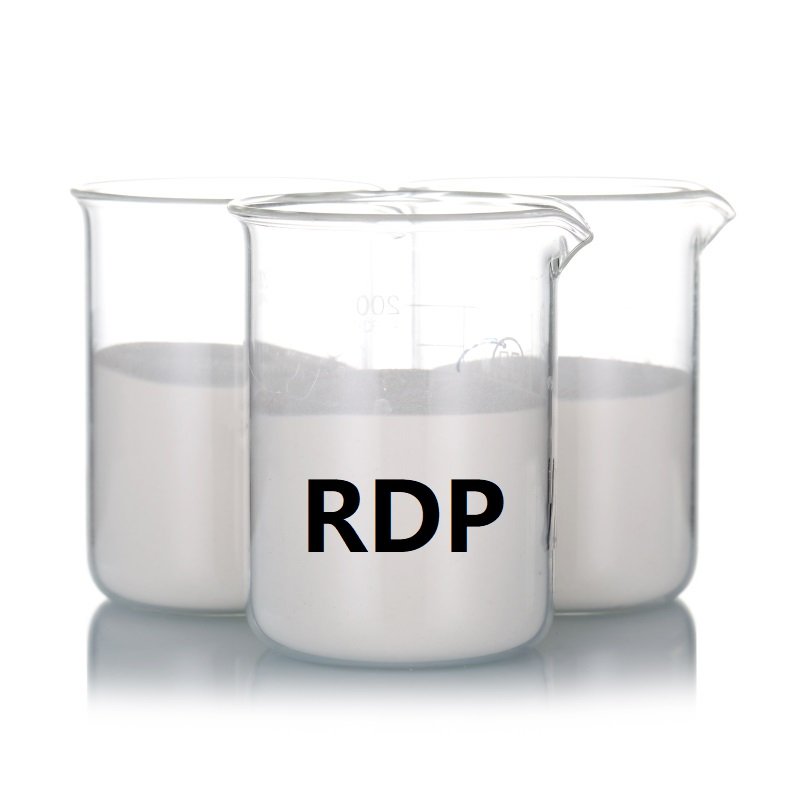
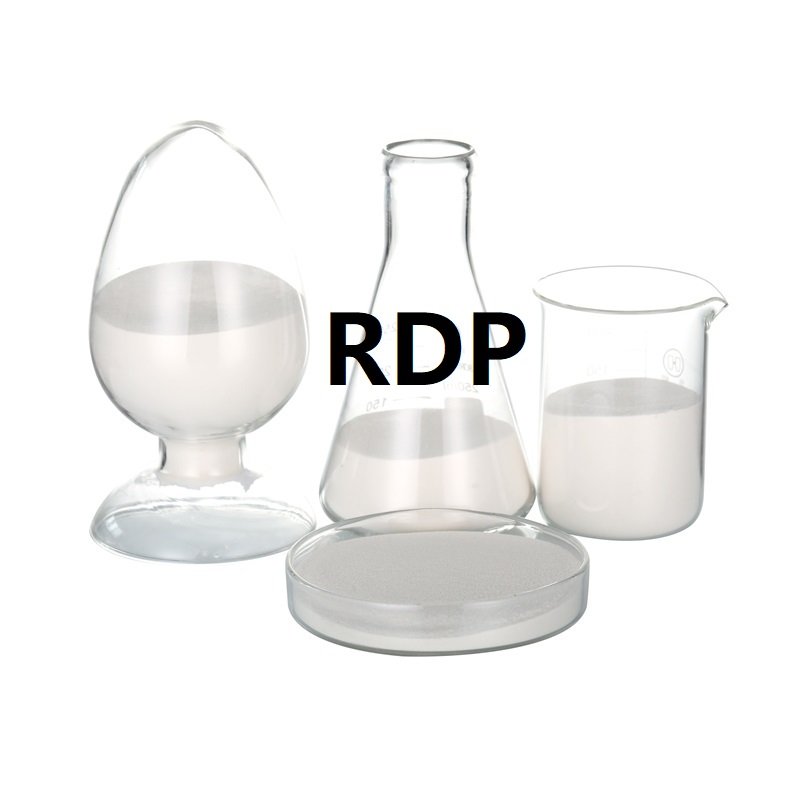
Redispersible Polymer Powder is a spray-dried polymer additive (typically based on vinyl acetate-ethylene, acrylic, or styrene-butadiene copolymers). When mixed with water, RDP re-disperses into a stable latex, forming a continuous, flexible polymer film throughout the cementitious matrix as the mortar dries.
This film imparts several critical performance upgrades:
RDP enhances adhesion through three synergistic mechanisms:
Film Formation: The polymer film acts as a flexible binder, increasing internal cohesion within the mortar and bridging the mortar to the tile and substrate.
Surface Modification: Polymer particles penetrate pores and modify surface tension, improving wetting and spreading for better contact, especially on non-porous surfaces.
Chemical Interaction: Functional groups (e.g., carboxyl groups in acrylic-based RDP) can form ionic bonds with calcium ions in the cement matrix, creating stronger chemical bonds at the molecular level.
Industry tests show that adding approximately 4% RDP can increase initial bond strength by up to 182% compared to unmodified systems.
The polymer film provides elastic deformation capability (elongation of 5%–15%) to the hardened adhesive. This flexibility is crucial for:
Stress Absorption: Compensating for shape changes in the substrate or expansion due to temperature changes, preventing stress concentration that leads to cracks.
Impact Toughness: Buffering shocks and vibrations (e.g., dropping tools on the floor).
The hydrophobic nature of the polymer film reduces water absorption and improves freeze-thaw stability. This is vital for applications in bathrooms, kitchens, outdoor facades, and underfloor heating systems, ensuring the bond remains reliable over the long term.
RDP improves the mortar’s workability and, when used in combination with cellulose ether (HPMC), significantly enhances anti-sagging performance on vertical walls. This reduces rework and increases installation efficiency.
It’s important to note that in a high-performance tile adhesive formulation, RDP works best in synergy with HPMC (Hydroxypropyl Methylcellulose).
HPMC acts as a water-retaining agent, ensuring proper cement hydration and providing extended open time (≥30 minutes) for tile adjustment.
RDP provides the flexibility and strong chemical-physical anchoring needed for a durable bond.
HPMC makes the bond “strong and dense”; RDP makes it “smart and flexible.” Neither can be omitted for large-format tile applications.
The optimal RDP dosage depends on your performance target and tile type. Overuse can negatively affect compressive strength and workability; underuse won't provide sufficient performance.
| Application | Recommended RDP Dosage (by total dry powder weight) | Performance Class Reference (e.g., EN 12004) |
|---|---|---|
| Standard Tile Adhesive (General Use) | 2% – 3% | C1 |
| Flexible Tile Adhesive | 3% – 5% (Minimum 2.5% for flexible; ≥3.0% for extended open time) | C2TE |
| Large-Format & Heavy Tiles | 4% – 6% | C2TE |
| Exterior & Wet Area Applications | 4% – 6% | C2TE (with freeze-thaw resistance) |
The issue of tiles falling off is a direct consequence of using rigid, unmodified mortar in applications that demand flexibility and superior adhesion. Modern building materials—especially large-format, low-absorption tiles—simply cannot be reliably installed with traditional methods.
Redispersible Polymer Powder (RDP) offers a proven, science-backed solution by:
Significantly improving bond strength through film formation, surface modification, and chemical interaction.
Imparting crucial flexibility to absorb stress and prevent cracking.
Enhancing water resistance and durability for long-term performance in challenging environments.
For adhesive manufacturers and construction professionals, formulating with the correct RDP type and dosage is the most effective way to ensure secure, lasting tile installations. As the industry moves toward high-performance dry-mix mortars, RDP has become not just an additive, but an essential component for quality and reliability.
Related News
Sep 01, 2026
Redispersible Polymer Powder in Self-Leveling Compound: Flexibility, Adhesion and Surface Quality in One Additive Self-leveling compound is one of the most technically demanding products in the dry mi

Sep 01, 2026
Is Your Exterior Render Cracking? How RDP Powder Prevents Facade Cracking
Is Your Exterior Render Cracking? The Answer Is Almost Always in Your RDP Specification If you manufacture exterior render and are receiving cracking complaints from contractors or if your product per
Sep 01, 2026
Why Do Tiles Fall Off? RDP Powder Improves Tile Adhesive Performance
Why Do Tiles Fall Off? How RDP Powder Improves Tile Adhesive Performance Tiles falling off walls and floors is more than just an aesthetic nuisanceits a safety hazard and a costly construction failure
May 28, 2026
Is Redispersible Polymer Powder the Best Additive for Dry Mix Mortar?
Is Redispersible Polymer Powder the Best Additive for Dry Mix Mortar? Introduction Dry mix mortar has become a mainstream building material in modern construction projects due to its stable quality, c
Navigation
Navigation
Contact Us
Contact Us
E-mail: sales@redispersiblepolymerpowder.com
Phone: +86 13731126075
WeChat: +86 13731126075
WhatsApp: +8613731126075
Add.: No. 308, Houpengtou,Mayuzhen, Jinzhou, Hebei Province